Are Charcoal Toothpastes Safe? Dentist-Approved Truth vs Marketing Hype
Are Charcoal Toothpastes Safe? Dentist-Approved Truth vs. Marketing Hype
Black toothpaste that turns teeth white makes for a striking before-and-after video, which is why charcoal products took off on social media. However, science hasn’t kept up with the marketing. Brookwood Dental Center offers a dentist’s opinion on charcoal toothpaste in Fenton, MO. If you’ve tried it or are seeing it everywhere online, here’s what charcoal actually does to your teeth and how it compares products with real evidence behind them.
What Is Activated Charcoal Toothpaste?
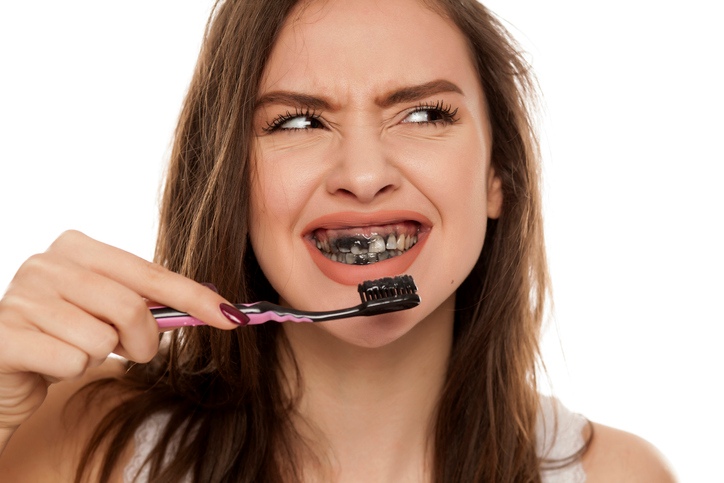
Activated charcoal is a fine black powder made by heating carbon-rich materials like coconut shells, wood, or peat at high temperatures. It creates a highly porous material that can bind to certain substances. That property is why hospitals use activated charcoal in some poisoning cases. Toothpaste brands borrowed that reputation and claim charcoal “pulls” stains and toxins off teeth. Charcoal toothpastes and tooth powders now come in dozens of formulas. Some are mostly charcoal with a few flavorings, while others blend charcoal into a conventional toothpaste base, sometimes with fluoride and sometimes without.
Are Charcoal Toothpastes Safe?
Occasional use of a well-formulated charcoal toothpaste isn’t likely to cause serious harm. The concern is daily, long-term use, especially with gritty powders. The biggest issues are abrasiveness and the lack of fluoride. Many charcoal products don’t list their abrasiveness, so you can’t tell how hard they are on enamel. Many also skip fluoride entirely, and toothpaste that wears down enamel without strengthening it works against everything your daily brushing is supposed to accomplish.
Activated Charcoal Toothpaste Benefits and Risks
Charcoal can scrub away some surface stains, and some people like how their mouth feels after using it. When we weigh activated charcoal toothpaste benefits and risks, though, the risks carry more weight, and the benefits have less research behind them. Here’s how they compare:
- Possible Benefit – Removes some surface stains from coffee, tea, and wine through abrasion.
- Possible Benefit – Appeals to people looking for products with fewer synthetic ingredients.
- Risk – Abrasive particles can wear down enamel and irritate gums over time.
- Risk – Many formulas contain no fluoride, leaving teeth less protected against cavities.
- Risk – Particles can collect in gum pockets, cracks, and around fillings and crowns.
- Risk – Little long-term research on safety or effectiveness.
Common Myths About Charcoal Toothpaste
Charcoal’s popularity has come with plenty of claims that don’t hold up. These are some of the myths we correct:
- It detoxifies your mouth. There’s no evidence charcoal removes toxins or harmful bacteria better than regular brushing.
- Natural means safe. Natural ingredients can still be abrasive enough to damage teeth.
- It whitens deep stains. Charcoal only affects surface stains.
- Black toothpaste can’t stain teeth. Particles can collect in cracks and around restorations.
- More brushing means faster results. Frequent use increases enamel wear without improving whitening.
Is Charcoal Toothpaste Effective for Whitening?
Charcoal works on the surface. Its gritty texture scrubs off some extrinsic stains, which can make teeth look slightly brighter. It doesn’t change your natural tooth color, and it can’t reach stains inside the tooth from aging, medication, or trauma.
Charcoal toothpaste for teeth whitening: safe or not? For most people, it’s a poor trade. Any whitening comes from abrasion, and the same abrasion that removes stains can thin your enamel. As enamel thins, the yellower dentin underneath shows through more, which can make teeth look darker.
Does Charcoal Toothpaste Damage Enamel?
It can, particularly with frequent use or aggressive brushing. Enamel doesn’t grow back, so gradual wear adds up. Charcoal powders tend to be the most abrasive because they often lack a paste base to cushion the particles. Brushing hard with a medium or firm toothbrush multiplies the effect.
Worn enamel can cause sensitivity, increase the risk of cavities, and make teeth look duller and more yellow. Gum tissue can wear down, too. Receding gums expose the root surface, which has no enamel and wears down even faster.
Side Effects of Charcoal Toothpaste
Not everyone notices problems right away, which is part of why charcoal products seem harmless. These are some of the side effects of charcoal toothpaste:
- Increased tooth sensitivity to hot, cold, or sweet foods
- Gum irritation or tenderness along the gumline
- Dark particles trapped around fillings, crowns, veneers, and gum margins
- Gray staining in cracks or along the edges of tooth-colored restorations
- More cavities when a fluoride-free charcoal product replaces regular toothpaste
Charcoal Toothpaste vs Whitening Toothpaste: Which Is Better?
For most people, a conventional whitening toothpaste is the better choice. Many whitening toothpastes use mild polishing agents like hydrated silica, along with fluoride, to remove surface stains without excessive wear. Some carry the ADA Seal of Acceptance, which means they’ve been tested for safety and effectiveness. Charcoal products may not be evaluated the same way.
Neither type changes your natural tooth shade. For that, you need peroxide-based whitening, either professional take-home trays or an in-office treatment. Think of whitening toothpaste as maintenance to keep new stains from building up, and charcoal toothpaste as an occasional novelty at best.
Dentist Opinion on Charcoal Toothpaste
Our dentist’s opinion on charcoal toothpaste is simple: we don’t recommend it for daily use. Fluoride toothpaste has decades of research showing it prevents cavities and strengthens enamel. Charcoal doesn’t have that track record, and its main mechanism, abrasion, is something we try to limit.
If you enjoy charcoal toothpaste, choose one with fluoride, use it only occasionally, and brush gently with a soft-bristled toothbrush. Use your regular fluoride toothpaste the rest of the time. If your goal is whiter teeth, professional whitening will get you there faster and safely. Charcoal toothpaste for teeth whitening, safe or not, will never match the results of a peroxide treatment designed for the job.
Brighten Your Smile Without Risking Your Enamel
A whiter smile doesn’t have to come at the cost of your enamel. At Brookwood Dental Center, we’ll check for wear, sensitivity, and staining, and then recommend a toothpaste or professional whitening option that fits your teeth. Book your next cleaning and learn more about the safe, effective whitening options we offer.