
Teeth Whitening at Home vs. Professional: What’s Actually Safe & Effective?
Teeth Whitening at Home vs Professional: What’s Actually Safe and Effective?
Whitening strips, LED kits, charcoal powders, and in-office treatments all promise a brighter smile, but they don’t deliver the same results or carry the same risks. At Brookwood Dental Center, patients often ask us to settle the debate over teeth whitening at home vs. professional in Fenton, MO. Both can work, but how well they work depends on the product, the type of stain, and whether a dentist is guiding the process.
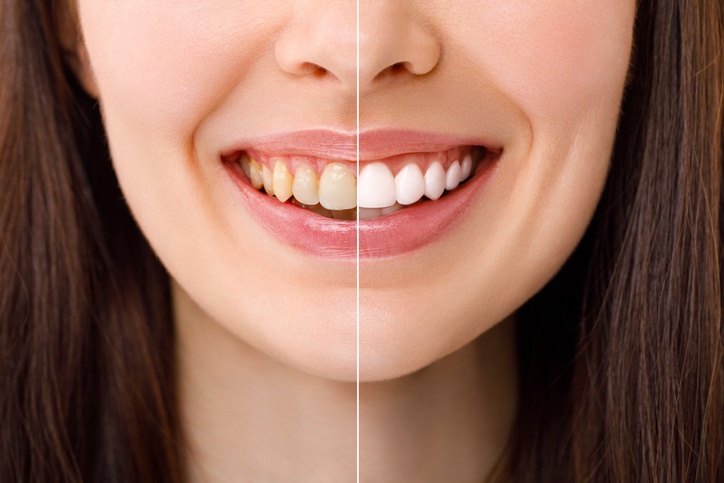
Causes of Discolored Teeth
Before choosing a whitening method, it helps to know what caused the discoloration. Surface stains, called extrinsic stains, sit on the enamel and respond well to most whitening. Deeper stains, called intrinsic stains, form inside the tooth and are harder to lift. These are the most common culprits:
- Coffee, tea, red wine, and dark sodas
- Tobacco, including cigarettes and chewing tobacco
- Natural aging, as enamel thins and the yellower dentin underneath shows through
- Certain medications, such as tetracycline taken during childhood
- Trauma to a tooth, which can cause it to darken from the inside
- Plaque and tartar buildup from inconsistent brushing
Teeth Whitening at Home vs Professional: What’s the Difference?
“At home” can mean two very different things. Over-the-counter products like strips, paint-on gels, and boil-and-bite trays use lower-strength peroxide and one-size-fits-all application. Professional take-home whitening uses custom trays we make from impressions of your teeth, filled with stronger, dentist-prescribed gel.
In-office whitening is the third option. We protect your gums, then apply a high-concentration gel to your teeth during a single visit. Every professional option at our office includes an exam first, because whitening over a cavity or receding gums can cause pain, and whitening won’t change the color of crowns, veneers, or fillings.
Is Home Teeth Whitening Safe?
Most over-the-counter whitening products are safe when you follow the directions. Products with the ADA Seal of Acceptance have been tested for safety and effectiveness. Problems usually come from overuse, poor fit, or unproven DIY methods.
Strips and generic trays can let gel seep onto your gums and cause irritation. Using them longer or more often than directed can increase sensitivity without much improvement. DIY remedies are a bigger concern. Charcoal powders are abrasive and can wear down enamel over time. Lemon juice and vinegar are acidic and erode enamel. Aggressive baking soda scrubs can do the same. Once enamel is gone, it doesn’t grow back, and thinner enamel actually makes teeth look more yellow.
Common Teeth Whitening Myths
Whitening is surrounded by advice that sounds reasonable but doesn’t hold up. These are the myths we hear often in our office:
- Whitening weakens your teeth. Approved peroxide products don’t harm healthy enamel when used as directed.
- Natural remedies are safer. Acidic and abrasive DIY methods often cause more damage than peroxide gels.
- Whitening works on crowns and fillings. Restorations keep their original color.
- Sensitivity means damage. Whitening sensitivity is usually temporary and doesn’t indicate harm.
- Whiter is always better. Overly bright teeth can look unnatural against your skin tone and features.
Professional Teeth Whitening Benefits
The biggest professional teeth whitening benefits are control and predictability. We check your teeth and gums first, so whitening doesn’t aggravate a problem you didn’t know you had. Custom trays fit snugly, keeping gel on your teeth and off your gums. In-office treatments use a protective barrier for the same reason.
Professional products are also stronger. That means faster, more noticeable results with fewer applications. We can adjust strength and wear time if you have sensitive teeth. Patients who choose take-home trays can keep them for future touch-ups, which is one of the more practical benefits.
At-Home vs Dentist Teeth Whitening Results: Which Works Better?
When comparing at-home vs. dentist teeth whitening results, the main differences are speed and strength. Over-the-counter strips lighten teeth a few shades over several weeks, and results can be uneven, especially around crowded or curved teeth. In-office whitening can brighten teeth by several shades in one visit. With our custom take-home trays, most patients see a noticeable change within a week and full results in about two weeks.
Results also differ in consistency. Custom trays and in-office application coat each tooth evenly, while generic strips may miss the edges and the spaces between teeth.
Best Teeth Whitening Methods Comparison
A comparison comes down to how strong each option is and how evenly it reaches your teeth. Here’s how the most common choices stack up:
- Whitening Toothpaste – Removes light surface stains with mild abrasives but won’t change your natural tooth shade.
- Over-the-counter Strips & Gels – Affordable and convenient, with modest, gradual results and a higher chance of uneven whitening.
- LED Light Kits – Popular online, though evidence that the light adds much benefit is limited.
- DIY Remedies Like Charcoal or Lemon – Little proven benefit and a real risk of enamel damage.
- Professional Take-home Trays – Custom fit with stronger gel, gradual control, and easy touch-ups.
- In-office Whitening – The fastest and most dramatic results, done under direct supervision.
Teeth Whitening Safety and Effectiveness: What Dentists Want You to Know
Teeth whitening safety and effectiveness depends more on how a product is used than on the product alone. Peroxide-based whitening doesn’t damage healthy enamel when used correctly. It breaks apart stain molecules inside the tooth rather than scraping the surface.
Temporary sensitivity is the most common side effect, and it usually fades within a day or two. Using toothpaste for sensitive teeth before and after whitening can help. If you’re pregnant or nursing, have untreated decay, or have gum disease, wait until we’ve addressed those first. Have realistic expectations, as well. Whitening brightens your natural shade, but it won’t make teeth unnaturally white, and it won’t change existing dental work.
Does Professional Whitening Last Longer?
Generally, yes. Professional gels reach deeper stains, so results last longer than over-the-counter products. With good oral hygiene and moderation with coffee, tea, and red wine, professional results can last several months or longer. Smoking shortens that window considerably.
Touch-ups make the biggest difference. Patients with custom trays can refresh their shade at home every few months with a little gel instead of starting over.
Find the Right Whitening Option for Your Smile
Store-bought strips can help with mild stains, but they aren’t the only option. At Brookwood Dental Center, we offer in-office whitening, custom take-home trays, and touch-up kits, and we’ll start with an exam to make sure your teeth and gums are ready. Book a whitening consultation and we’ll tell you what’s likely to work for your stains.